Deck Cleaning Guide: Timber, Composite and Painted Boards
Sunshine Coast decks face strong UV exposure, humid weather, summer rain and, near the beach, salt deposits. Dirt, leaf litter and algae can make boards slippery, while unsuitable cleaning methods can damage timber fibres, composite surfaces or paint. The safest approach is to identify your decking material and coating before choosing a cleaner or pressure setting.

Check Your Deck Before Cleaning
Clear away furniture, pots and outdoor rugs, then sweep loose debris from the boards and gaps. Check for raised screws, splinters, soft timber, loose boards and peeling paint. Repair unsafe areas before washing, and arrange an inspection if you notice movement, significant decay or damaged supports.
Choose a mild, overcast day rather than cleaning hot boards in direct Sunshine Coast sun. Cleaning solutions can dry too quickly on warm surfaces, leaving residue or uneven results. Check the forecast so the deck has time to dry afterwards.
How to Clean Timber Decking
Timber needs gentle treatment, particularly if it is weathered or has an existing oil or stain. Use a deck cleaner compatible with the timber species and finish. Some products are designed for routine washing, while others prepare bare timber for recoating; they are not interchangeable.

- Wet or prepare the boards as directed on the cleaner’s label.
- Apply the correctly diluted product to a manageable section.
- Scrub along the grain with a suitable deck brush, avoiding wire brushes.
- Keep the cleaner from drying and observe the labelled contact time.
- Rinse thoroughly using a garden hose or a manufacturer-approved low-pressure method.
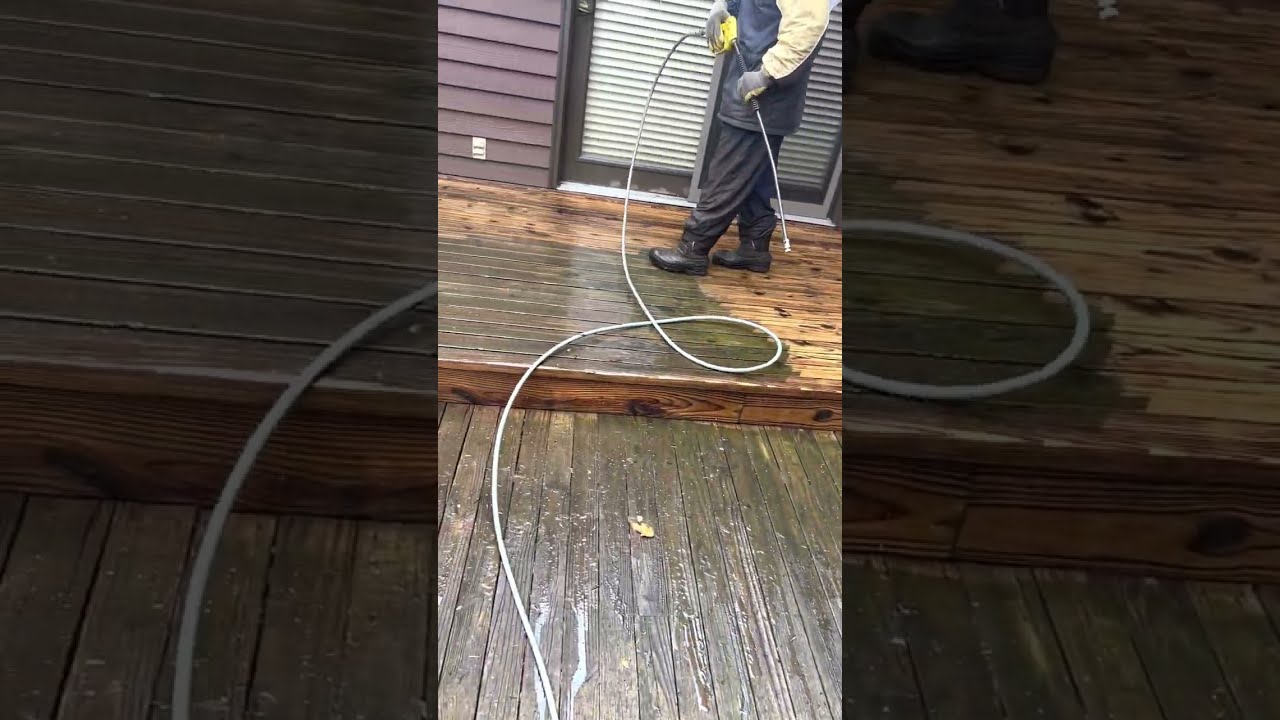
More pressure does not mean a better clean. A concentrated jet can gouge timber and leave raised fibres or https://connercyww389.image-perth.org/hot-water-vs-cold-water-pressure-cleaning-explained visible stripes. If pressure cleaning is permitted, use a wide fan spray, maintain the recommended distance and test an inconspicuous area first.
If you plan to oil or stain afterwards, let the timber dry to the coating manufacturer’s requirements. Drying time varies with humidity, shade, airflow and recent rain; a surface that feels dry may still hold moisture.
How to Clean Composite Decking
Composite decking is generally low-maintenance, but it still collects grime, food spills and organic growth. Start with warm water, a manufacturer-approved mild detergent and a soft-bristled brush. Brush textured boards in the direction of the grain and rinse away all detergent.
Clean grease and food spills promptly because some composite warranties specify cleaning timeframes. Check the exact brand’s care guide before using mould removers, bleach-based products or a pressure washer. Capped and uncapped composites can have different cleaning requirements.
Avoid abrasive pads, wire brushes and unapproved solvents. Do not sand composite boards to remove marks unless the manufacturer expressly allows it, as sanding can damage the protective surface.
How to Clean Painted Deck Boards
Painted decking needs a gentle wash that preserves the coating. Use a mild cleaner suitable for painted exterior surfaces, a soft brush and a low-pressure rinse. Test first to check for colour change, softening or loss of sheen.
Do not direct a pressure jet at peeling edges, cracks or board ends, where water can lift paint and penetrate beneath the coating. Flaking areas need proper preparation and repainting rather than increasingly aggressive cleaning. If an older coating may contain lead, have it assessed before sanding, scraping or pressure washing.
Manage Mould, Algae and Cleaning Runoff
Shaded decks and areas beneath pots are especially prone to slippery growth in the Sunshine Coast’s humid conditions. Use a treatment approved for your decking material and follow its application and rinsing instructions. Never mix cleaning chemicals, especially bleach with acids or ammonia.
Plan where wash water will go before starting. Keep detergents, paint flakes and contaminated water out of stormwater drains and waterways. Sweep up solids first, protect nearby plants as directed on the product label, and use appropriate runoff containment. Check current Sunshine Coast Council guidance if you are unsure about disposal requirements.
Keep Your Deck Cleaner for Longer
- Sweep regularly and remove leaves before they break down between boards.
- Raise pots on suitable feet and move outdoor rugs periodically so trapped moisture can dry.
- Keep board gaps clear without damaging the decking or fixings.
- Inspect shaded, damp and high-traffic areas regularly for slippery growth.
- Maintain timber finishes and painted coatings according to their product instructions.
Consider professional deck cleaning when access is difficult, growth is extensive or the surface needs restoration. Ask the contractor how they identify the decking material, protect existing coatings and manage runoff. A suitable cleaning method should remove contamination without sacrificing the surface underneath.
House Washing Sunshine Coast
(07) 5241 4915